

Looking for a top hardscaping contractor in Colorado Springs? We’ve got you covered for any hardscape project including patios, walkways, flagstone, pavers, boulders, brick, concrete, wood, retaining walls, drains, creek beds, rock mulch, and xeriscaping features.
Fresh Landscapes is a locally owned landscaping & snow removal contractor in Colorado Springs with 15+ years of experience – 1,000+ projects completed and 2,500+ residential and commercial customers served. 100% workmanship guarantee. 100% licensed and insured. Our people make the difference - the highest trained and experienced work crews with prompt, friendly 5-star customer service and communications.
We provide residential and commercial hardscaping services within 25 miles of Colorado Springs. Never a lowball or deceptive offer. 100% transparent pricing – no hidden costs or fees. Military discounts available. Get started on your hardscaping project today. You won't regret hiring Fresh Landscapes. Request a free estimate now:
Below are common questions people have about hardscaping in Colorado Springs, CO …
Although most homeowners use the terms interchangeably, these are two distinct aspects of outdoor design.
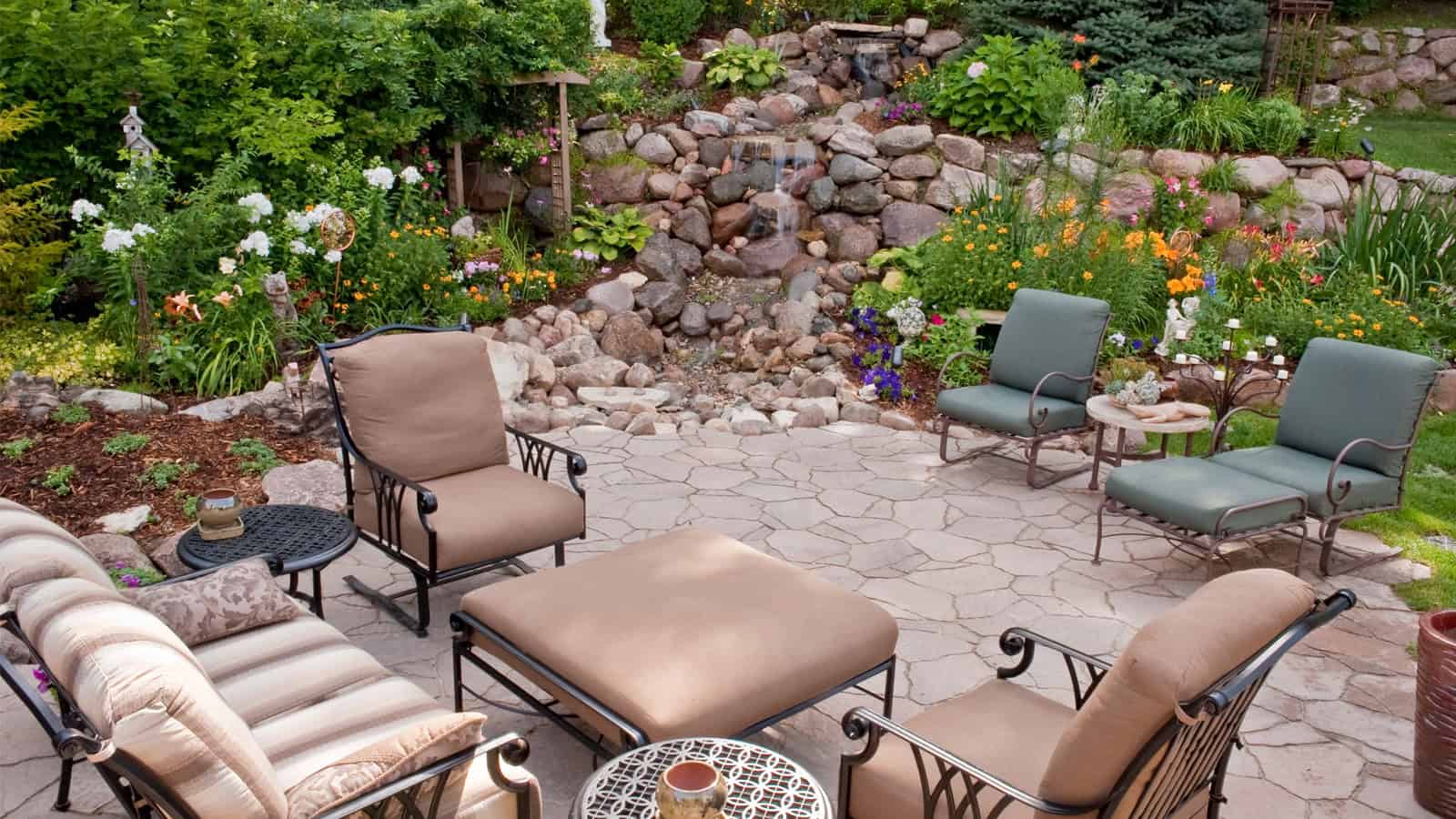
Hardscaping refers to the non-plant elements of a landscape. This can include stone, concrete, brick, wood, and metal. Examples of hardscaping include patios, driveways, retaining walls, fire pits, pergolas, and outdoor kitchens. These items give the framework or architecture of your yard.
Landscaping (also known as “softscaping”) on the other hand, refers to the softer elements — your grass, trees, shrubs, flowers, and soil.
A good outdoor space has both. Hardscaping offers the framework and usable spaces. Softscaping brings in texture and color. If you are looking to reduce your water bill and usage in Colorado Springs, a hardscape-dominated design is the right choice.
Because of the regional conditions that affect the longevity of certain materials, the semi-arid and high altitude environment of Colorado Springs, with its high levels of UV radiation, extreme temperature swings, and repeated freezing and thawing actions, will influence the selection of materials.
Freeze-Thaw: This is your hardscaping kryptonite. Moisture will enter porous materials in the daytime (winter/spring). If this water freezes (at night), it will expand. This will crack concrete, split poor-quality stone, and pop up pavers.
UV Intensity: We are over 6,000 feet in elevation here, and the sun is intense. UV exposure will discolor the pigments in colored concrete and in some pavers.
While less hazardous than stone, our dry, windy environment is still something to consider. The fact that the earth is so dry and airy (i.e., the gravel and sand under your hardscaping) in Colorado means that it needs to be well compacted. When it isn’t compacted well, the sand and gravel shrink as they dry further and fluctuate with the wind, resulting in an unlevel patio.
To address the environmental issues listed above, we suggest materials that are dense and hard-wearing …
Concrete Pavers: A good-quality concrete paver is an excellent choice for our area. They are made to a high compression strength (usually over 8,000 psi), so they are less likely to crack from freeze-thaw action. Since they are individual blocks, they can move a bit with the settling ground without cracking like a solid slab would.
Natural Stone: Natural stone is not all the same …
Good: Flagstone (especially the harder types such as Siloam stone or Arizona Buff) and Granite.
Avoid: Don't even think about using Sandstone or very porous limestones that will absorb too much water and then spall off during the winter.
Stamped Concrete: This is okay as long as you have expansion joints and you seal it. It requires more maintenance (requiring resealing every 2-3 years) and isn't as water- or fade-resistant as some other options.
Retaining Wall Blocks: Segmental retaining wall blocks are designed to be strong and to drain well. They’re a great option for retaining walls around many properties in the Colorado Springs area that have slopes.
One of the most important elements in maintaining your home’s foundation is to ensure that proper water flow is maintained. More often than not, hardscaping is the best way to divert water from structures …
Permeable Pavers: Water is able to drain between stones and seep down into a bed of gravel beneath the pavers. This minimizes runoff and keeps water from puddling up on your patio.
Grading and Slopes: With hardscaping, we can make permanent adjustments to your yard’s grade. We can build patios with a slight 1-2% grade away from your home that directs water into drains or garden areas, rather than allowing it to collect against your foundation.
Retaining Walls: If your yard has a grade change, a retaining wall helps prevent soil loss from heavy summer rains. We can create separate tiers in your yard to reduce water flow. This will allow water to percolate into the ground instead of washing away your valuable topsoil.
French Drains and Channels: We can install trench drains in concrete or paver patios to collect water and channel it to a designated location.
Xeriscaping, a landscaping approach that reduces water use, is essential in our semi-arid region. Hardscaping is an essential part of any good xeriscape …
Larger Living Spaces: Replacing even a small section of bluegrass lawn with a paver patio or flagstone sitting area reduces your yard's water needs.
Rock Mulch: Since wood mulch often disperses in our high winds, using rock or cobble in garden beds keeps the soil moist, deters weeds, and gives a tidy, contained appearance with drought-tolerant grasses and yuccas.
Wash or Dry Creek Beds: These are areas of the yard that resemble a river or creek, with river rock and boulders. Not only do they add beauty to a yard, but they also help to handle rainwater.
Boulders: Big accent boulders bring a level of height and attractiveness to an otherwise flat yard and don’t require a drop of water.
Resource: https://www.aspen.gov/1278/Water-Wise-Landscaping-Resources
Costs vary widely depending on materials, site accessibility, and design complexity, but having rough estimates will help with planning …
Patio: Professionally laid pavers cost anywhere from $15 to $45 per square foot. If you're looking for something less expensive, a plain concrete pad will be cheaper. Natural flagstones, however, if set on a concrete slab, are priced at the high end of that spectrum.
Retaining Walls: Block segmental walls typically run between $35-$60 per square foot. Natural stone walls are more labor-intensive and, therefore, more expensive.
Site Preparation: Keep in mind that prices typically include demolition, excavation, and rubble removal. In Colorado Springs, rocky soil can slow down excavation at times.
When comparing bids, ensure the contractor specifies the depth of base material included. A lower bid usually means less gravel base, which will lead to settlement and failure within a few years. Here at Fresh Landscapes, we follow the ICPI (Interlocking Concrete Pavement Institute) guidelines to ensure a long-lasting patio.
The contractor you choose is the most critical part of your project. A patio, if not installed correctly, may not even last a year. Here are the things you need to consider …
Licensing and Insurance: The company should maintain general liability and workers' compensation insurance. This ensures that you are prepared in case a worker is hurt on your premises.
Local Portfolio: Request pictures of local projects. A Colorado Springs contractor should be familiar with the soil and weather conditions.
Warranty: A good contractor will guarantee their work. Ask about the workmanship warranty. We at Fresh Landscapes have a clearly defined warranty policy because we know we do quality installations.
An itemized contract: Never agree to anything verbally. This should include the work to be done, the materials to be used (including the manufacturer and color), how payment will be made, and when the work will be completed.
Communication: Observe the contractor’s communication style while they provide the estimate. Does he or she return phone calls? Are your questions thoroughly answered? In most cases, how a contractor communicates is how they will manage a project.
It is high desert, so plants and trees must be able to survive with limited water. We prefer native or adapted plants and trees, such as:
Yes, xeriscaping is a great way to have a low-water, beautiful landscape here in Colorado Springs. We incorporate:
All to create a low-maintenance, yet beautiful landscape.
Spring and fall are the best seasons for planting and new installation because the weather is typically cooler. Planning and design work can be completed at any time of the year. Hardscape work (patios and retaining walls, etc.) can usually be completed in late fall or into winter, depending on weather conditions.
Resource: https://extension.colostate.edu/topic/garden-landscape/
Have more questions? Ready to start your residential or commercial hardscaping project? Want to learn more about all of our Colorado Springs landscaping and snow removal services? Fresh Landscapes is here to answer all your questions and schedule your service work today:
